
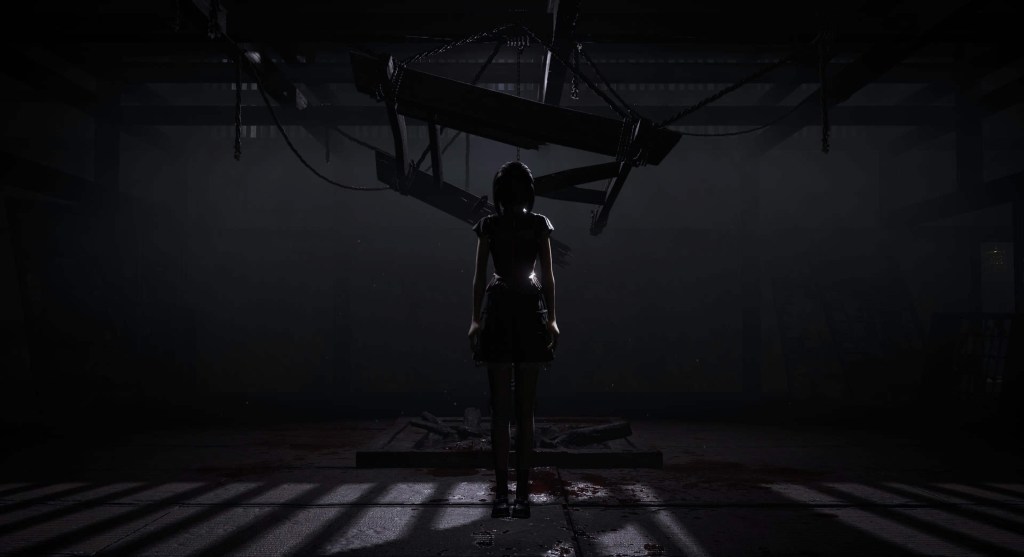
So the fact that I am reviewing a remake might be a bit of a surprise if you’ve listened to the podcast some and know that I am really not super big on remakes, at least lately. They are the current gaming trend and I would honestly rather we get new games over remakes. This time is a little different though! Apart from just being a big Fatal Frame fan, this remake is something special. Fatal Frame is a series that has not gotten a new game since 2014. But it has gotten remasters! In 2021 we got a remaster of Fatal Frame: Maiden of Black Water, or Fatal Frame 5. My hope with that remaster was that if it did well we might get a new game. And while we didn’t get a new game, we did get a remaster of Fatal Frame: Mask of the Lunar Eclipse, or Fatal Frame 4. This is important since unlike Fatal Frame 5, this game never got released outside of Japan. Meaning that the remaster actually took a bit more work this time around as it involved fully translating the game. Now, why is this important? Well to me this means that the remaster of Fatal Frame 5 did well enough to put more effort into the remaster of Fatal Frame 4 even if it didn’t do well enough that they felt confident in a new game. So to me, since we still haven’t gotten a new game but did get a full on remake, this means that if the remake of Fatal Frame 2 does well we might finally get a new game…
So that is what peaked my interest over most other remakes! I really want this series to come back with a new game so I am happy to support these remasters and this remake. However, for this comeback to happen, this remake has to be good. So… Is the Fatal Frame 2 Remake good?
Yes, it is! But it’s not perfect either.
Let’s start by talking about what kind of remake this is. This remake is very similar to the Resident Evil 2 remake from 2019. It’s the same story and characters but game play is very different compared to the original. So it’s not just a fancy new coat of paint over the original, this was rebuilt and remade! Keeping with the RE2 comparisons, the Fatal Frame 2 Remake takes the original’s fixed camera angles and tank controls and replaces them with a far more modern over the shoulder perspective. This perspective isn’t anything new to the series though! This is the same perspective that Fatal Frame 4 and 5 have! These games represent what I’d call the ‘modern’ Fatal Frame games, so whenever I refer to the modern games of the series, those are the ones I’m talking about as they are very different game play wise compared to 1 through 3. With these two being the more modern games in the series, the remake does take plenty from them! But thankfully not everything.
My main issue with the modern games was how they are structured. While all Fatal Frame games have ‘chapters’ the modern games made them into full on levels, complete with their own scores and inventory. This gives the modern games way more of an arcade vibe than a proper horror game. Something the series has been struggling with even before the modern games. Thankfully, the remake retains the structure from the classic games! The whole thing is one long experience where you maintain your inventory throughout, adding more to the survival horror feel as you don’t get to replenish it between levels. That arcade feel is still there in the combat, but we’ll get to that later!
The shift in perspective is going to be the most glaring change from the original, and it’s one I think the developers handled well honestly! The Lost Village was tweaked here and there to make it work from this new perspective but it still remains largely the same. Well beyond some new additions, but we’ll get there in a bit! Something else that remains largely the same was the game’s story. And don’t worry, I won’t be getting into spoilers as usual!
The plot centers around twins Mio and Mayu. Two young, very close girls. One day they decide to visit a forest they use to play in as kids, wanting to come back there one more time before a new dam is built which will put the entire forest underwater. While reminiscing about a time where they were running and Mayu had a nasty fall, which resulted in her messing up her leg and Mio promising not to ever leave her behind again, Mio realizes Mayu has run off, chasing after a crimson butterfly. Following after Mayu, Mio suddenly feels the forest spinning around her. When it finally stops, not only does she not know where she is but it’s night as well! Continuing into the forest, Mio eventually finds Mayu at the top of a hill over looking a village. The Lost Village! At least according to Mayu. Who goes on to further explain the rumor about the village, which is basically that those who get lost in the woods find themselves in this village and are trapped there never to escape!
This is the exact same set up as the original game and it doesn’t change much from there. As they explore a nearby house, Mio finds the Camera Obscura, fights a ghost, and Mayu runs away again seemingly possessed in someway to follow these crimson butterflies! It’s now up to Mio to rescue her sister, keep her safe, and find a way to escape the village before the Crimson Sacrifice takes place! I won’t go into anymore detail beyond that though as discovering what is going on with this twin obsessed village is a big part of the fun.
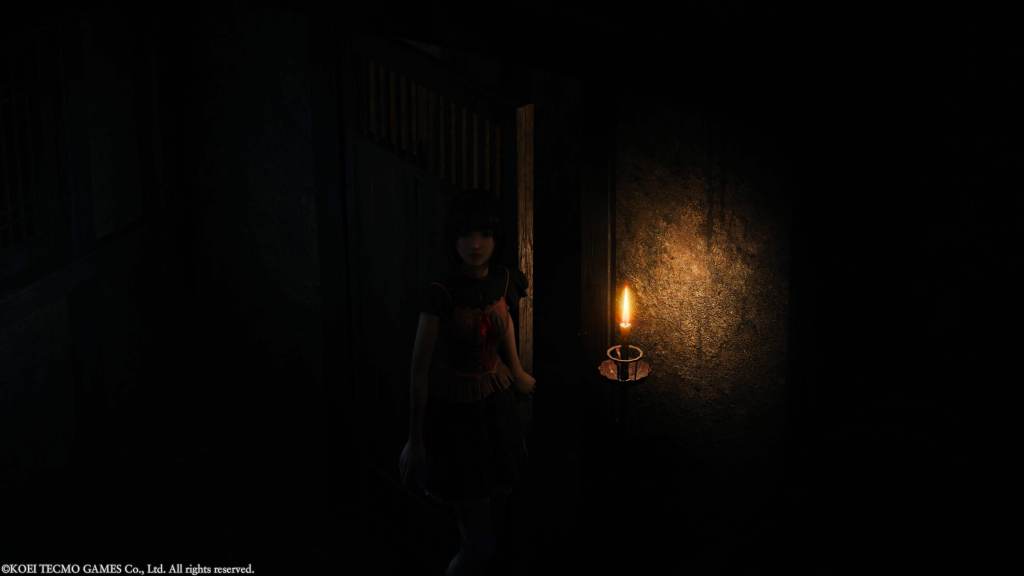
Like I said, the story itself remains largely unchanged. But you could say that the story was added to! One of the bigger changes from the original is the inclusion of Side Stories. As you progress through the game, you’ll find broken bits of Spirit Stones. Spirit Stones being stones left behind by those in the village and can be listened to with the Spirit Radio to hear their last moments. These broken stones will set up side quests for you to follow throughout the game! These quest mainly give more context and story to some of the side characters. Story that sometimes was in the original game in notes you’d find around but now they are given more attention and generally provide even more context than the original! You don’t get much else for following them through to the end though. You do get the completed version of the Spirit Stone you got to start the quest however! This is important since Spirit Stones have a new functions which is they are now charms that give you passive buffs when equipped. You won’t be getting any special items or outfits for doing them though if that’s what you were hoping for. However, another purpose of these Side Stories is to highlight some of the new areas added to the game!
Despite the Lost Village, or Minakami Village as it’s actually called, being a, well, village it never really felt like one in the original. It always felt kind of small for that, at least for me. The entire village, according to the original game, was one really big house, two slightly smaller houses, an even smaller house than those, a store house, a shrine, and a graveyard with some underground passages running between them all. To me, that doesn’t sound like much of a village. So the remake adds a couple places! The main ones being a small field leading to a small bunch of shacks by the river way and a temple off to the side! There are some smaller places too but those are the big additions. Not exactly much but they do help the place feel a bit more lived in! Sadly, they aren’t used all that much. The river side area is used more than the temple, which is basically just there for some of the Side Stories, but that’s it. Still, I don’t think these are bad inclusions! Even if they do feel a touch like padding at times.
The Side Stories and new areas are far from the only changes though! The next big changes comes from how the Camera Obscura works. And it’s a change I’m a little mixed on.
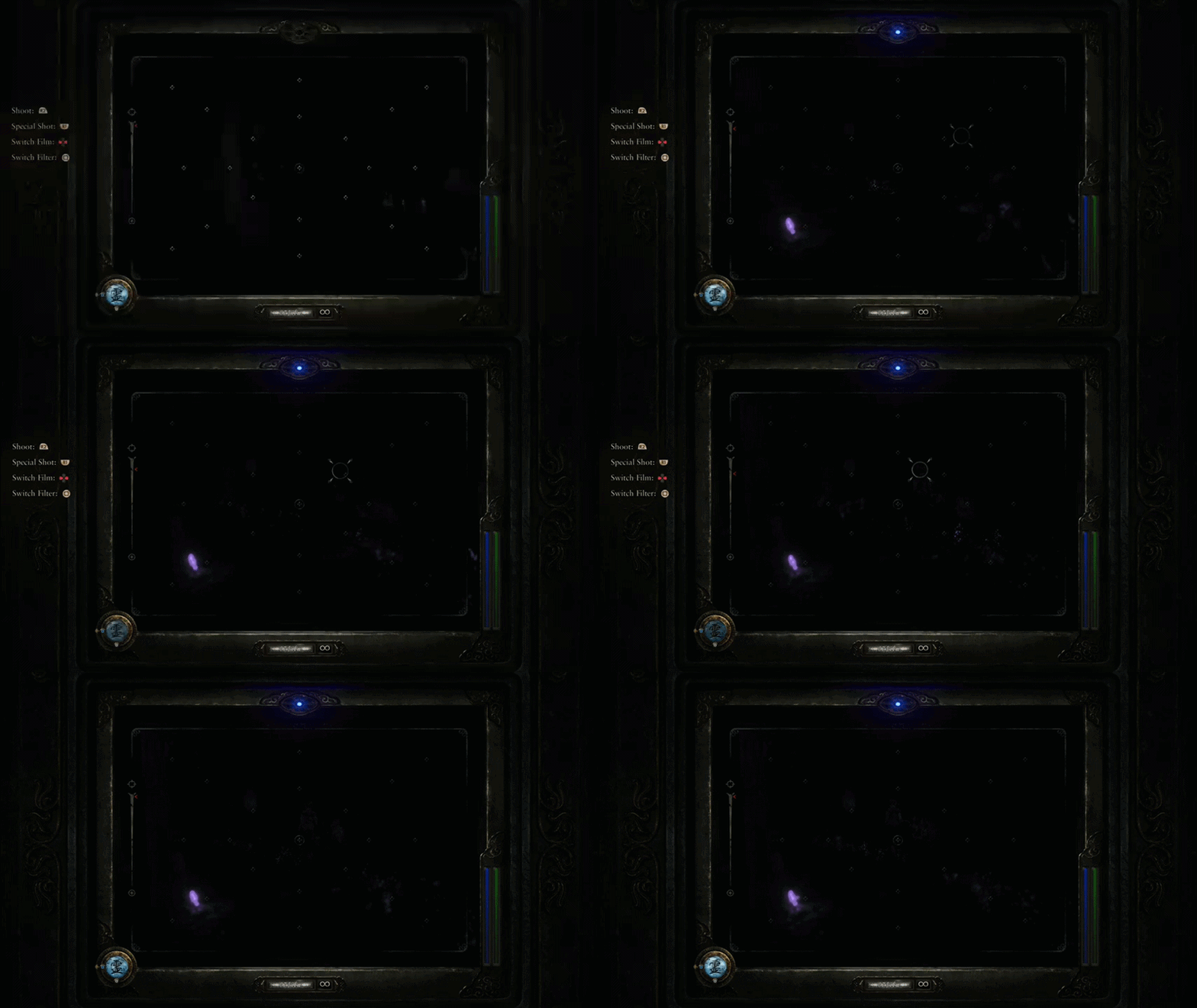
The Camera Obscura is a staple of the series and the primary way you fight ghosts and defend yourself. But this change to the Camera is more about exploration actually. In the remake, the Camera now has Filters, four to be exact! Standard, Paraceptual, Exposure, and Radiant Filters. While they do have their different uses in combat, we’re going to focus on how they are used for exploration first.
Let’s start with the Standard Filter as it is the one you start with in game! It’s exactly what you’re expecting too. Standard doesn’t really do anything fancy, it’s mainly used for combat and if upgraded can be the strongest of the Filters too. It doesn’t do much special compared to the other Filters. It is, as the name suggests, very standard and will probably be the Filter you use the most due to being the most upgradable, at least on your first playthrough. There is always reasons to use the the other Filters though. Speaking of…
The Paraceptual Filter is what you get next. This Filter allows you to follow traces of things. They show this off by having you follow Mayu’s trace after she runs off towards the beginning of the game. It’s other function is that it allows you to see ghosts through walls helping you better keep track of them in combat. It applies a blue tint over the view as well.
Next is the Exposure Filter! This Filter allows you to take pictures of things that have vanished. How this works is that you’ll get pictures from the past that are different from how things are now. A good example is you get a picture showing a chest. When you find the place the picture was taken however, no chest is there. Taking a picture of the spot with the Exposure Filter on brings that chest back! This is mainly used for story purposes but there are a couple of times you can get some extra goodies like this. This Filter is also used to take pictures of Revenants, special ghosts that usually have ties to the past. Its combat use however is something we’ll discuss later! The Filter also puts a yellow tint over everything.
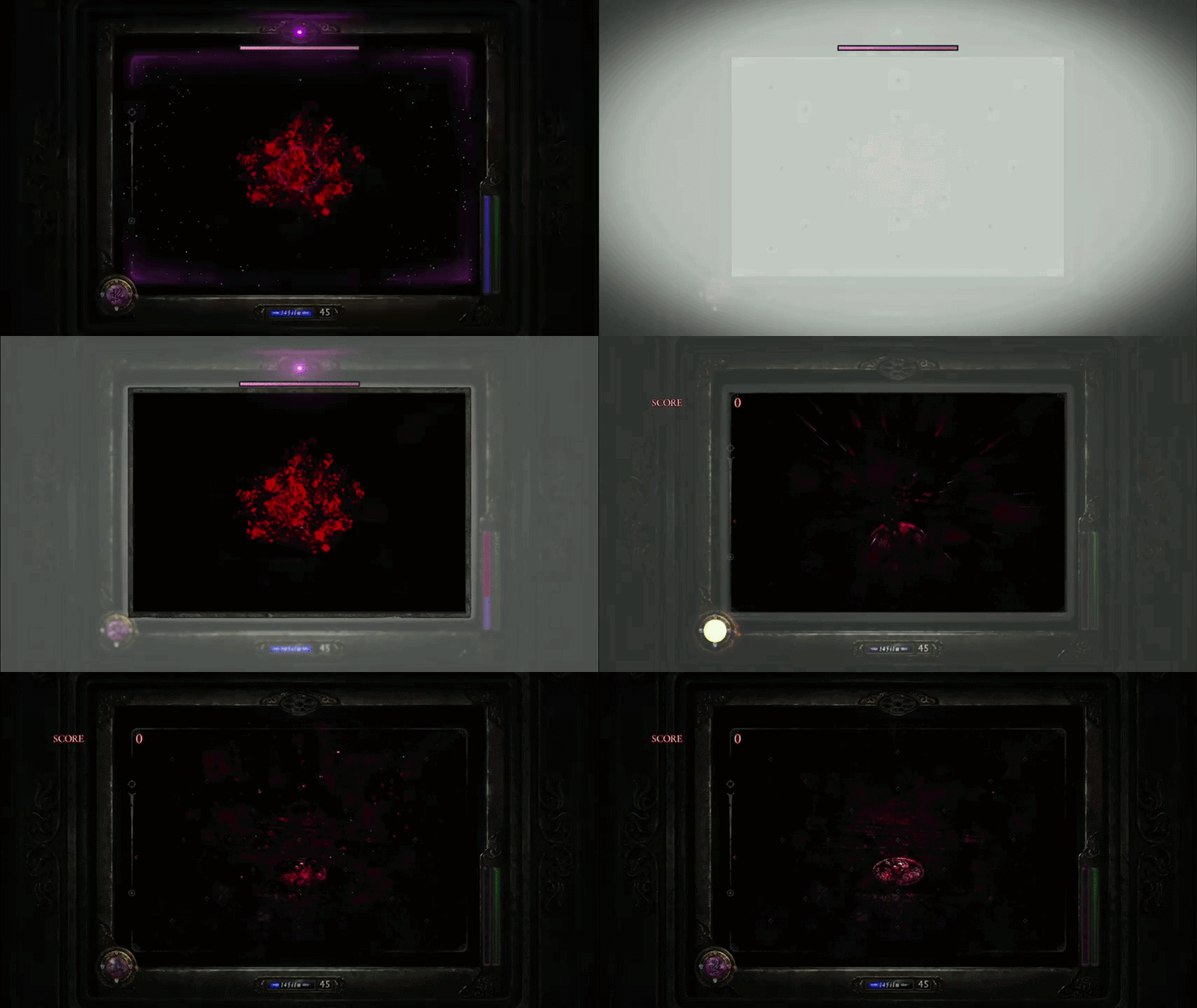
Lastly, we have the Radiant Filter. As you progress through the game you’ll find doors and other objects that are covered in bloody hand prints. It looks like you can damage them but no matter what you won’t be able to do enough. This is where this Filter comes in! The Filter has a special shot that when charged can clear these hand prints away. This can get you extra items, open up shortcuts, and all sorts of things! It’s special use in combat is to clear away grime that can cover your view, something that happened very rarely in my time playing, but still. It also puts a purple tint over your view.
And that’s all the Filters! It’s honestly a neat system but one I don’t have strong feelings on. While their uses can be cool, they also feel a bit tacked on. Something I didn’t cover though is that they each have different ranges, reload speeds, and power when it comes to combat. I didn’t bring this up mainly because you are most likely only going to be using the Standard Filter for combat, but I’ll get into that later! For now I’ll just say the Filters are something I don’t hate, but I don’t particularly like them either. I wouldn’t be heart broken if they didn’t ever appear again in the series.
Beyond those things and the combat, which we’ll get to later, there are a lot more changes but they are very minor ones. Ones I probably wouldn’t have picked up on if I hadn’t very recently replayed the original Fatal Frame 2. However, there are some other changes in particular that I feel only has positives to them.
On my recent replay of the original game, I specifically played it with the mind set of what could be improved in the remake. And one thing that very much came to mind was the relationship between Mio and Mayu. While I won’t say their close relationship was poorly portrayed in the original, you the player only really cared about Mayu largely because the game tells you to. Large parts of both versions of Fatal Frame 2 have you escorting Mayu around as you explore and try to find a way out. And in terms of escort characters, Mayu is far from the worst! But she wasn’t much of a stand out either and she did have some annoyances. The main ones for me were the fact that sometimes when exploring things Mayu will follow right behind you literally boxing you in. This isn’t a big deal, but it never felt good needing to basically shove her around just to move past her. Another annoying thing was her lagging behind while you’re running around. Something that obviously makes sense given Mayu’s hurt leg. However, that doesn’t change the fact I always felt bad when she called out to me to slow down. Apart from the game play, Mio and Mayu didn’t always seem super close in the story either. This mainly stems from how quiet Mio could be. Whenever Mayu talks to her while you’re walking around, Mio would just about never answer and even in cutscenes she could be weirdly quiet when Mayu was clearly struggling. All of this was thankfully remedied in the remake!
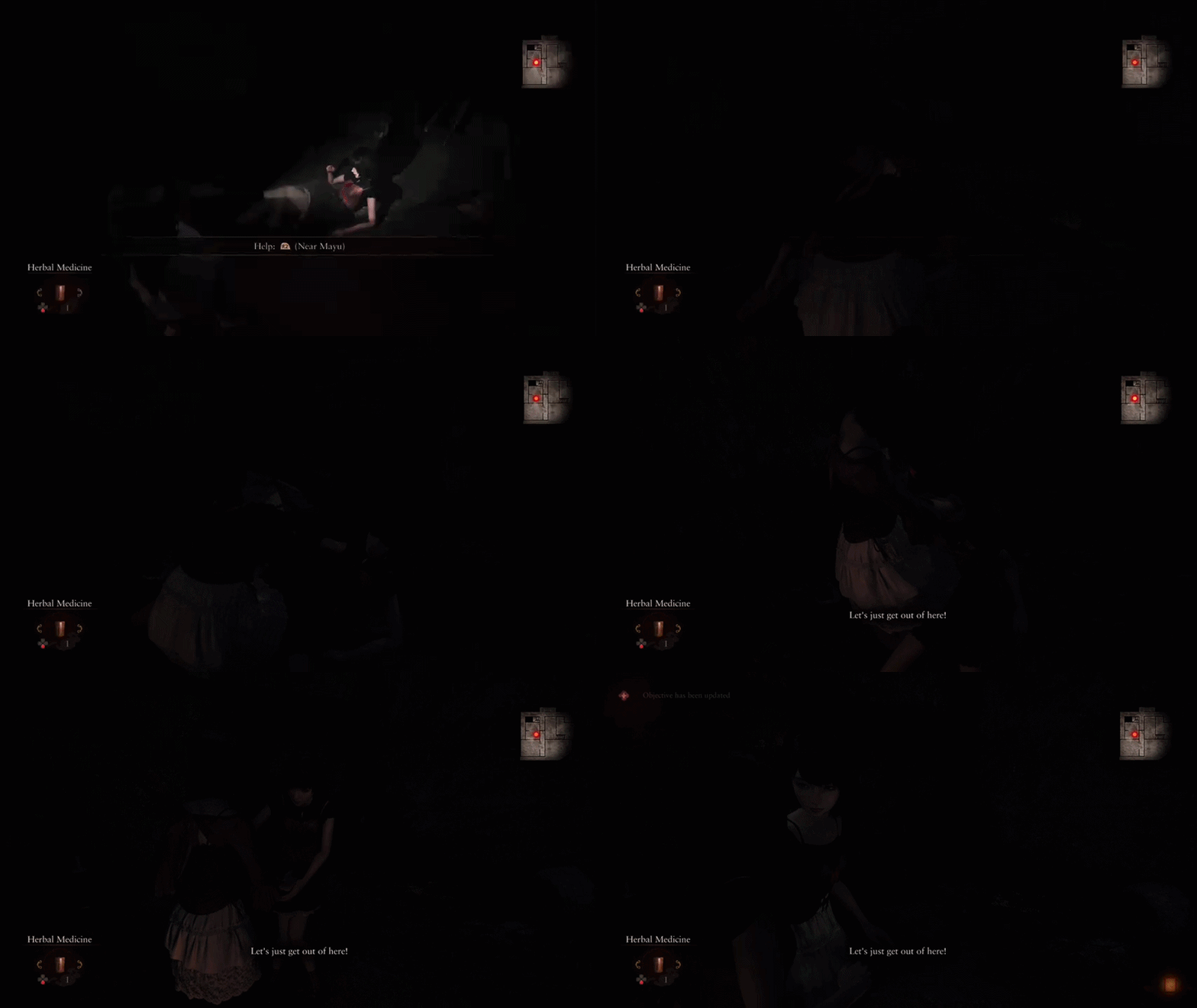
Let’s start by talking about how they addressed this in the exploring bits! For one, Mayu doesn’t follow you exactly meaning she won’t be boxing you in anymore, and even if she did, she’ll now move out of the way instead of getting shoved! Nice changes but nothing compared to how they fixed the issue of her lagging behind. Now when you want to book it with Mayu in toe, you can just hold her hand! On paper, it’s a really simple change but it’s also very effective! For one it means you can rush as much as you want without leaving your sister behind. It also shows how close the two are and that Mio is making good on her promise to always be with Mayu and look out for her! Even better than that, there is another big reason to hold Mayu’s hand and it’s the fact that doing this heals you. Now Mayu won’t lag behind and the player has a reason to want to be close to her too! This also makes the sections where Mayu is gone more effective since if the player isn’t connection with her on a story level, they will at least be missing her for the healing! Mio also talks a bit more in cutscenes as well, but the main additions that really makes it feel like she cares about Mayu is a bit more subtle. When getting an item she needs to save her sister, Mio will often say to herself that she needs to hurry back and help Mayu. It’s a very small touch but one that helps to show that Mio really does care for her sister! And it’s far better than her continuing to be silent.
It might sound odd, but these little changes really were some of my favorite additions to the remake. They might be the only changes that I feel are complete improvements over the original. Which isn’t to say that the other changes are bad or anything, just that they are different. The changes to Mayu and Mio are ones that I honestly wish were in the original however so I feel like they needed to be highlighted.
With that though, we should probably move on to the biggest, and easily most polarizing, change to the remake.
The combat.
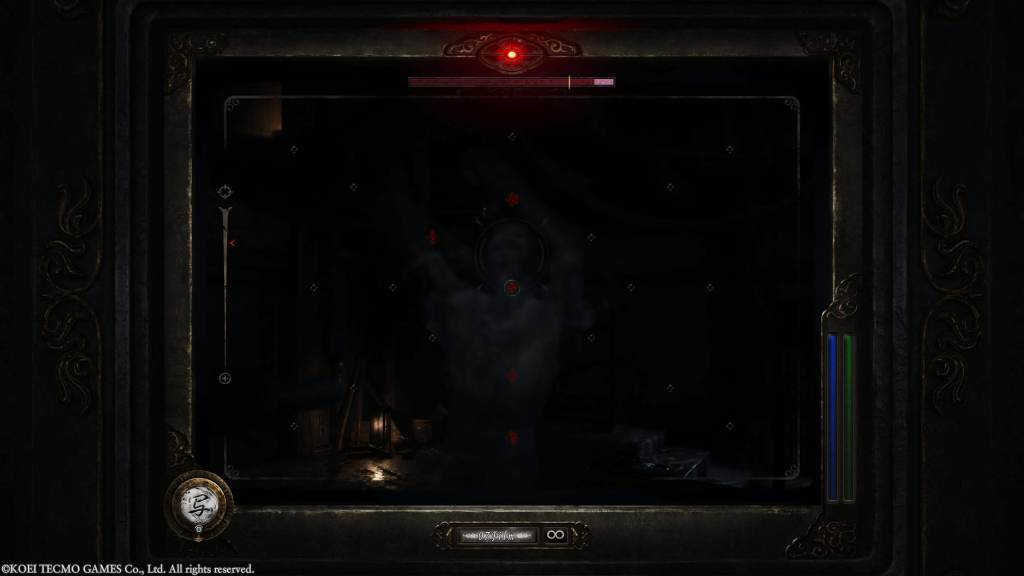
Combat has always been polarizing for Fatal Frame. It’s what usually puts horror fans off from the series. The main thing is that most find it too arcade like and something out of place with the rest of the game and I do understand this. The series’ combat has a lot of big numbers and high scores from nailing shots on the ghosts and all that. It can quickly shift from surviving to wanting to get the best score you can on the ghost. Which is undoubtedly fun but not exactly scary. The remake does try to change this up a bit by having your score be hidden by default, something you can change very easily in the options, but it’s still the same style of combat at the end of the day. But I’m getting ahead of myself! How does combat work in the series?
Fatal Frame‘s combat is what tends to set the series apart from other survival horror games. Where in Resident Evil you have a gun and bullets, in Fatal Frame you have a camera and film! The Camera Obscura to be specific. And as you probably guessed, you take pictures of ghosts to harm them, but it’s not as simple as just aiming and shooting. One of the defining elements of combat is getting a Fatal Frame. This is a special shot you can only get when a ghost is in the middle of attacking and generally is as close as possible.
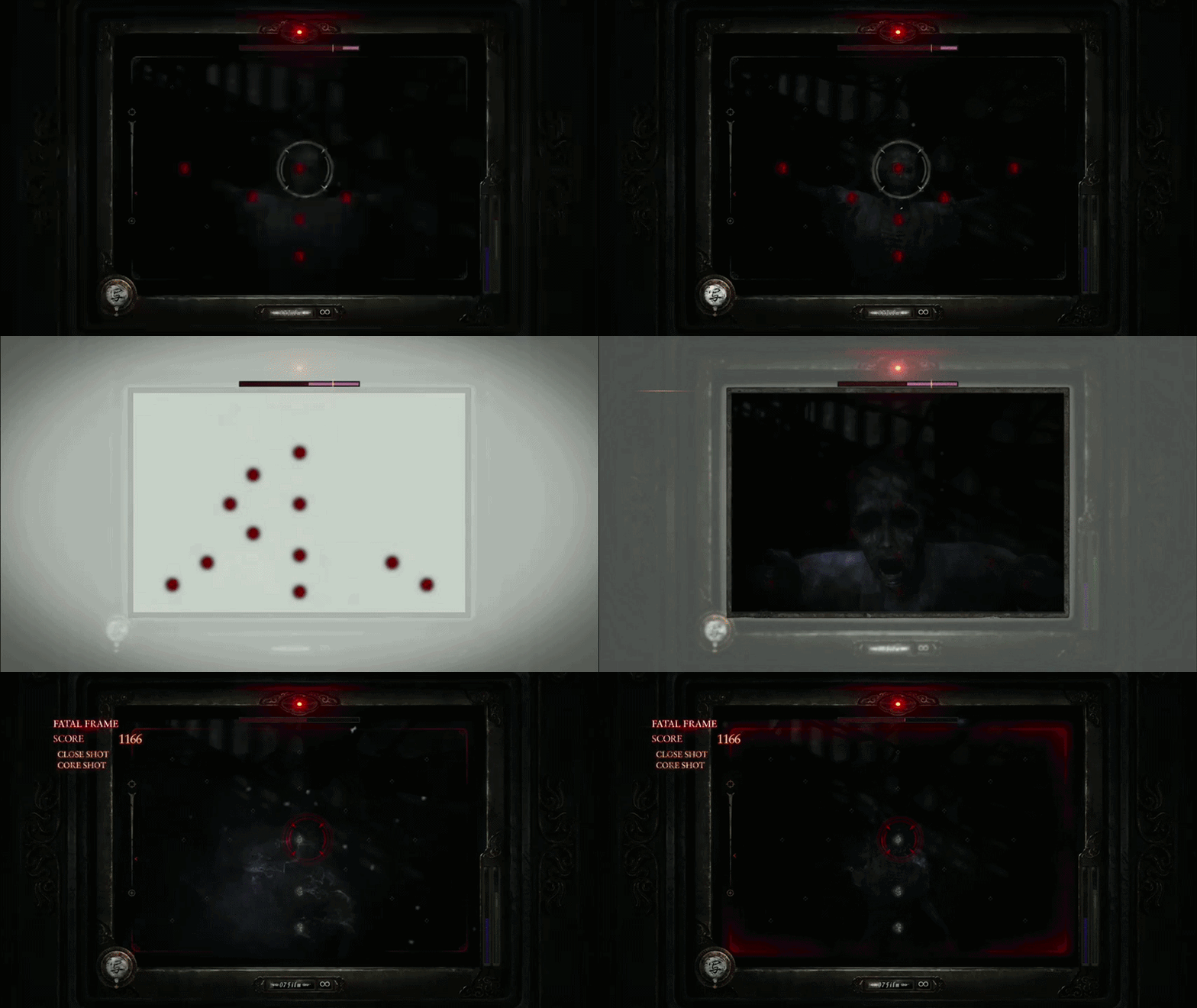
Landing a Fatal Frame can usually be dangerous as you have to put yourself in harms way but it’s how you’ll do the most damage. It also means you have to look at those creepy ghosts for the best shot as well, making this a very clever way to do combat. There is obviously more to combat than that but that’s the basics. You use your camera to take pictures of ghosts and try to land Fatal Frames. However, combat is where some people tend to fall off from the series and it all comes down to the point system.
Combat in the series usually has lots of numbers and high scores flying around as you’re battling, something that’s usually in the top left of the screen. This gives the series a very arcade feel as I’ve mentioned before. It’s hard to feel super scared of something when you are also wanting to get a high score or a combo going, you know? The series has always struggled with this but sadly this time around, that’s not the main issue with the combat…
Long time fans of the series are either really into the arcade combat or they are willing to brush it off but that’s not the problem with the remake’s combat. While it is largely the same, there are a few key changes that really make it a problem. Before getting into that though, I want to talk about some of the changes I actually enjoy about the remake’s combat!
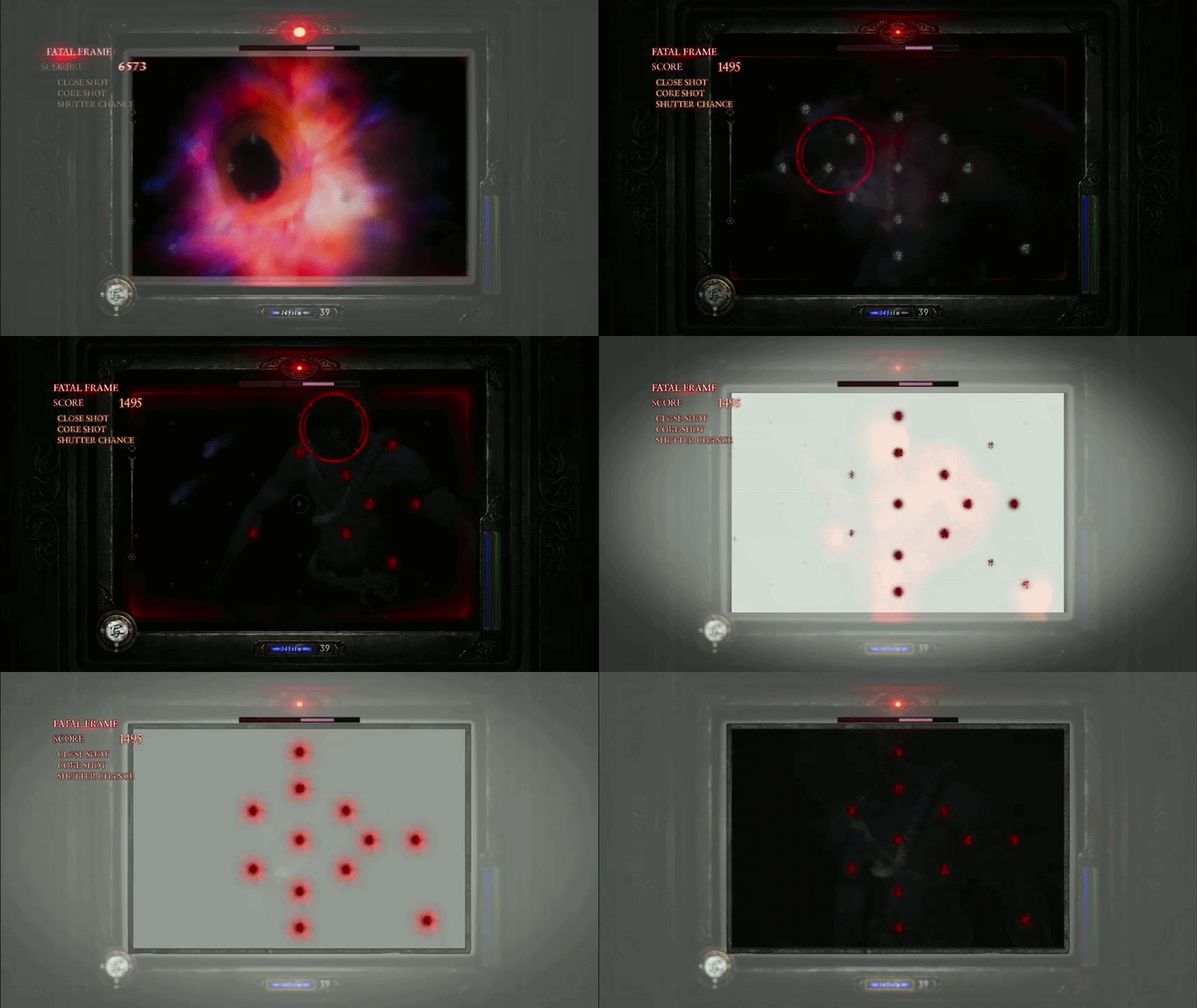
First I want to talk about the lock on feature. Locking on to a ghost was one of the big additions to combat introduced in the modern games. This is mainly because those games featured motion controls for their aiming and it could be a struggle to stay focused on a ghost’s face. This was a struggle in the classic games too but more due to the clunky controls. With the lock on feature, the camera would focus directly on the face, keeping it in the center of frame, meaning that the only challenge for getting a Fatal Frame was nailing the timing. And I’ll admit, I’ve never been a huge fan of this. To me, it made combat way too easy most of the time. Granted, I still vastly prefer the modern games’ combat over the classics’ just due to how less clunky and frustrating it could be but still! I bring this up mainly to say that the remake actually changes the lock on in a way I really like! Now instead of putting the ghost’s face directly in the middle of the frame at all times, the lock on just insures that the ghost’s face will not leave the frame. While this does mean you still mostly just need to wait and time your shots, it doesn’t feel so controlling and does give room for errors to be made. It also very much let’s the player appreciate the ghosts and their animations that much more! The reason this exists though isn’t to cater to people like me however, instead this more loose lock on is in service of the other change to combat I enjoy. The Focal Points!
Like I said before, the main aim in combat is to land a Fatal Frame, however the remake changes this up a little with Focal Points. How this works is that there are now points on the screen of your camera that will light up when a ghost is over them. You’ll start with a small circle around the middle of the frame but as you upgrade the Camera Obscura more points will appear. While Fatal Frames are still what you’re aiming for, now you are also wanting to light up as many points as you can when snapping a shot! This is how you truly rack up damage in the remake and I think it’s a great addition. It adds far more strategy to aiming and shooting as now you need to be aware of how you’re going to angle a shot rather than just making sure the ghost’s face is in frame. This means that each ghost and their different movement make for different encounters. In past games usually the main difference between the ghosts was just learning when they were likely to attack. Now you need to keep not only that in mind but how you plan to move when they do attack! This really lets your appreciate all the animation work on the ghosts as well. Something that has been very much improved from the original game too! While the actual designs of the ghosts haven’t changed from the original, their animations have been given plenty of updates, and they look great.
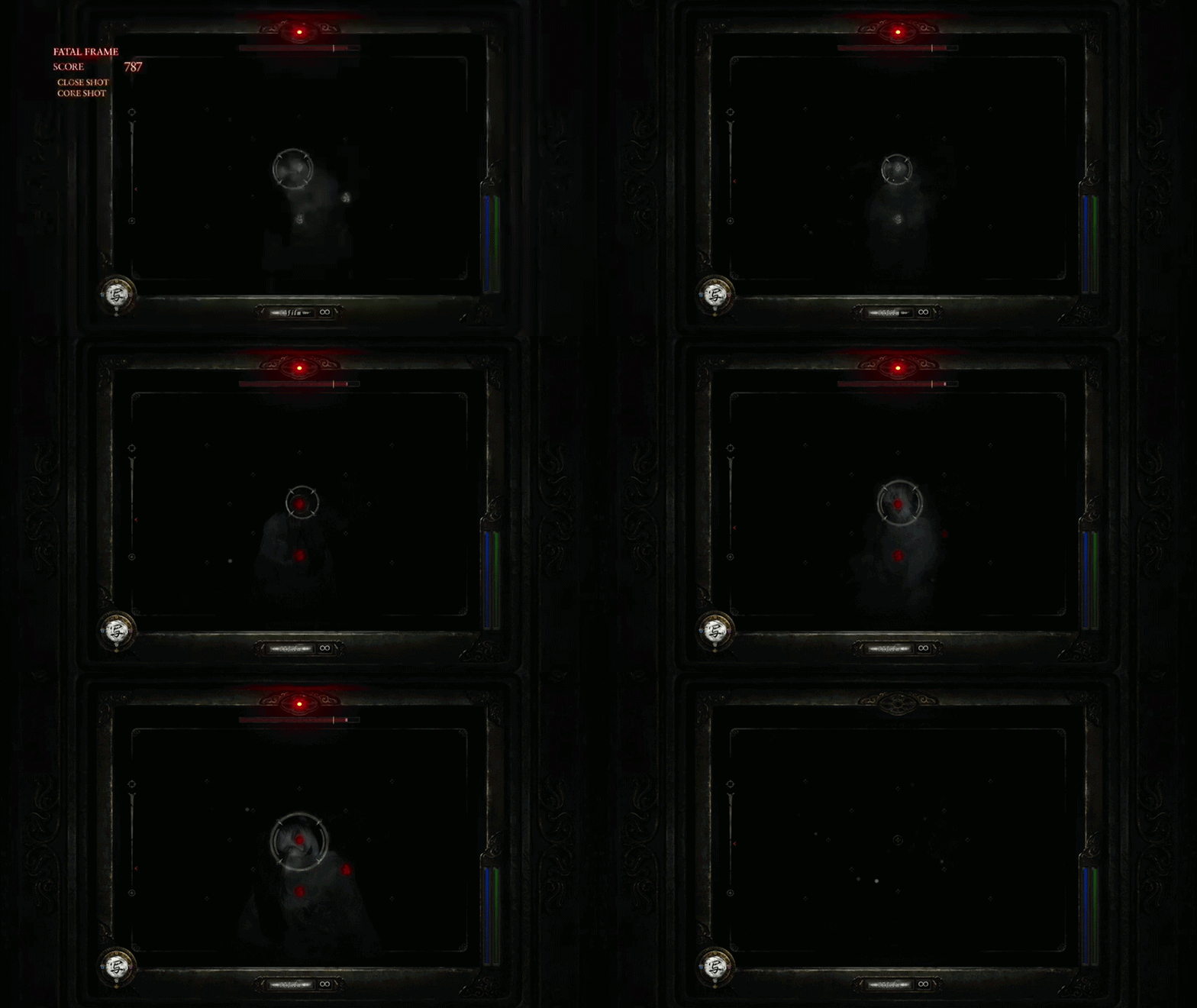
Another new addition to combat is a new attack ghosts can perform. The Leer attack! How this works is that a ghost will now pause and vanish, when they reappear they’ll be right in the player’s face hitting them with a scary look that completely drains your Willpower, which is the game’s stamina system. Something you want to keep up so you can run and dodge in the middle of a fight, and not be knocked over! So while the Leer attack doesn’t do damage it’s still a problem to be hit by. Dodging it is easy on paper though. Just simply hit the dodge button as they try and do it. Doing so successfully will give you a free Fatal Frame too! The hard part is nailing that timing. It can honestly be pretty tricky too! You’re given plenty of time to realize the attack is coming but given that ghosts can vanish just normally, it can be rough to pick up when they are vanishing for a Leer. This honestly adds a really fun dynamic to the fight and kept me on my toes! Like the Focal Points, I hope they keep the Leer attacks for a potential future game.
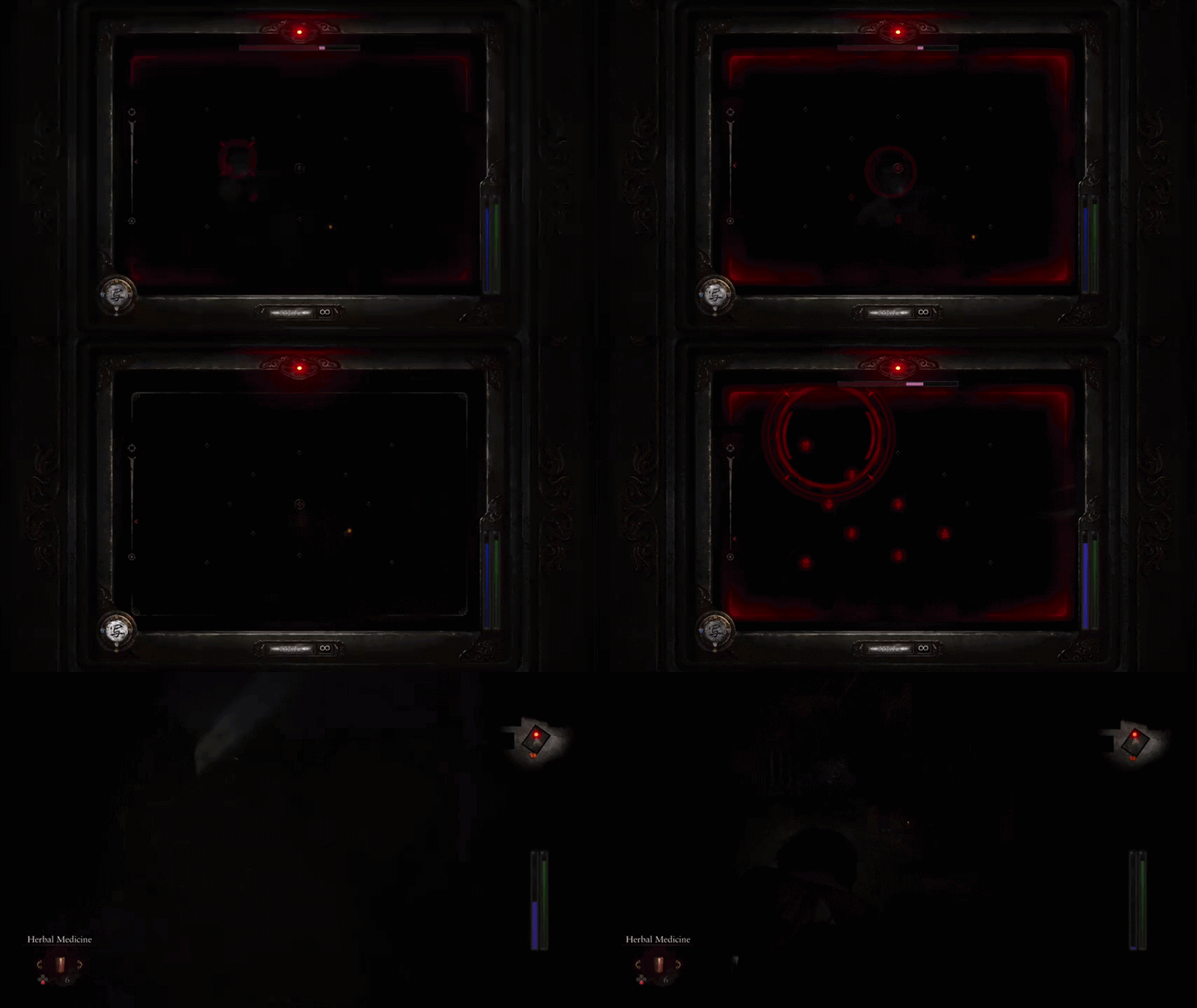
However, that’s sadly where I’m going to stop with the praise to combat as now we need to discuss the problems with it, and why the combat is honestly the biggest problem with the remake in general…
To get straight to the point, combat is now a total slog! And this mainly comes down to balance which isn’t something super simple to explain so bear with me here. When you first start the game there are three difficulties, Story, Normal, and Battle with each one changing how strong the ghosts are and not much else. The amount of items you can find and pick up are all the same, something easy enough to test since you can hop between these three difficulties on the fly without needing to reload a save or anything. As I tend to prefer a challenge, I decided to play on Battle. As such, I faced ghosts with more health that did more damage and it was difficult! But not in a fun way. Fatal Frame has always been a survival horror series but it’s never had the resource management as something like Resident Evil. Running out of film was something you always had to watch out for but it was never a huge deal. The remake wanted to change that up.
Film now feels extremely rare! You’ll always find some when exploring a new area but the problem is that Fatal Frame 2 doesn’t have very many areas and you’ll often be going back and forth between each of its areas multiple times. This is a problem since repeat visits don’t give more film. This was the case in the original too but in that game the ghosts weren’t so tanky and this is where the problem truly lies. The remake does not feel in any way balanced around it’s enemies and how much film it gives you.
Ghosts are so much harder to take down now! This is most noticeable at the start of the game when you haven’t upgraded your Camera yet. Upgrading your damage and how many focal points you have helps a lot but not enough. It never makes up for the lack of film. And on that note let me explain the film a bit more. In most other survival horror games you’ll usually find bigger and better guns as you go on. Like in Resident Evil you’ll only start with a pistol and knife but by the end you usually have shotguns and machine guns and the like to help with the tougher enemies. In Fatal Frame you only ever have the Camera Obscura but you do get different types of film. Your types of film are usually Type 07, 14, 61, 90, and 00. Sometimes there are types between those like 36 but you get the idea! The higher the number, the more powerful and rare the film is. Not including 00 which is the strongest type around. Every film type is limited besides 07. Think of 07 as your knife in a Resident Evil game. It’s the film you use when you don’t have any other option as you have an unlimited amount of it but it’s very weak to compensate. This has always been the case in every Fatal Frame, but never has it felt this weak and this annoying to use.
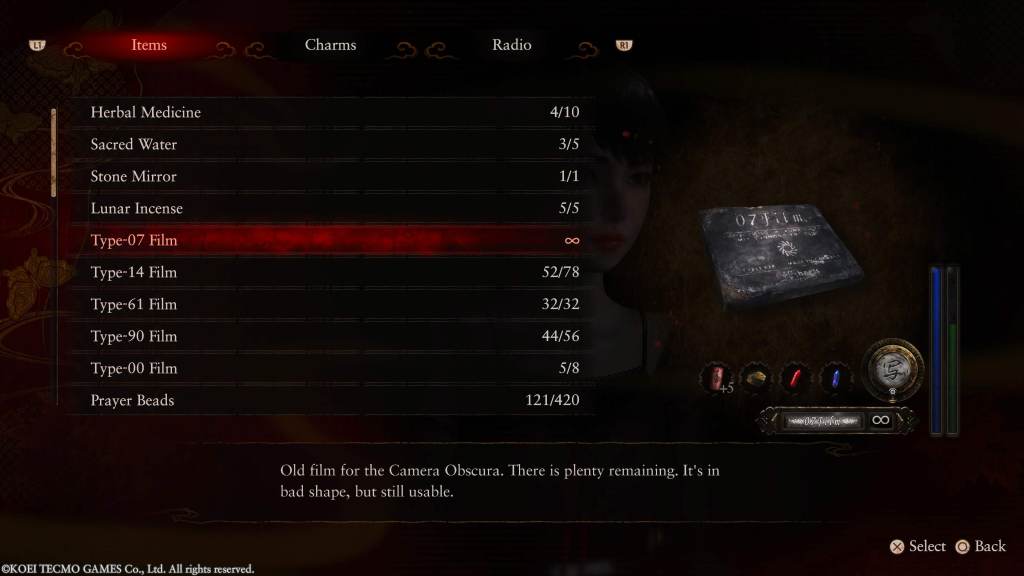
And this is truly what makes the remake’s combat feel like a slog. With how scarce even type 14 film can be, you are going to have to use type 07 for a lot of fights. This makes fights take ages to finish in a way that isn’t challenging, it just feels boring. Now, this would honestly be fine if I ever felt like it was my fault for being in this situation. Like if I misused my other film types or if I was playing too safe trying to hoard what film I had, but nope! I tried using my film sparingly but it was never enough. Now you might say that this is probably just a problem on Battle difficulty, it is suppose to be harder than the others! But it’s not. I ended up bumping the game down to Normal part way through my first playthrough, and while it did fix the problem for a time, it wasn’t long before I was back into the slog of combat with no proper film! Even with weaker ghosts it still took a bit to take them down and this is partly due to a new mechanic introduced to combat in the remake. The ‘aggravation’ mechanic. And no, it’s not about the player being aggravated.
During a fight with a ghost, there is a chance for them to become ‘aggravated’. When this happens the ghost gains a red aura around it, it also hits harder and is far more aggressive. Honestly, kind of a neat wrench to throw into the combat! Or it would be if the ghosts didn’t also regain health when becoming aggravated…
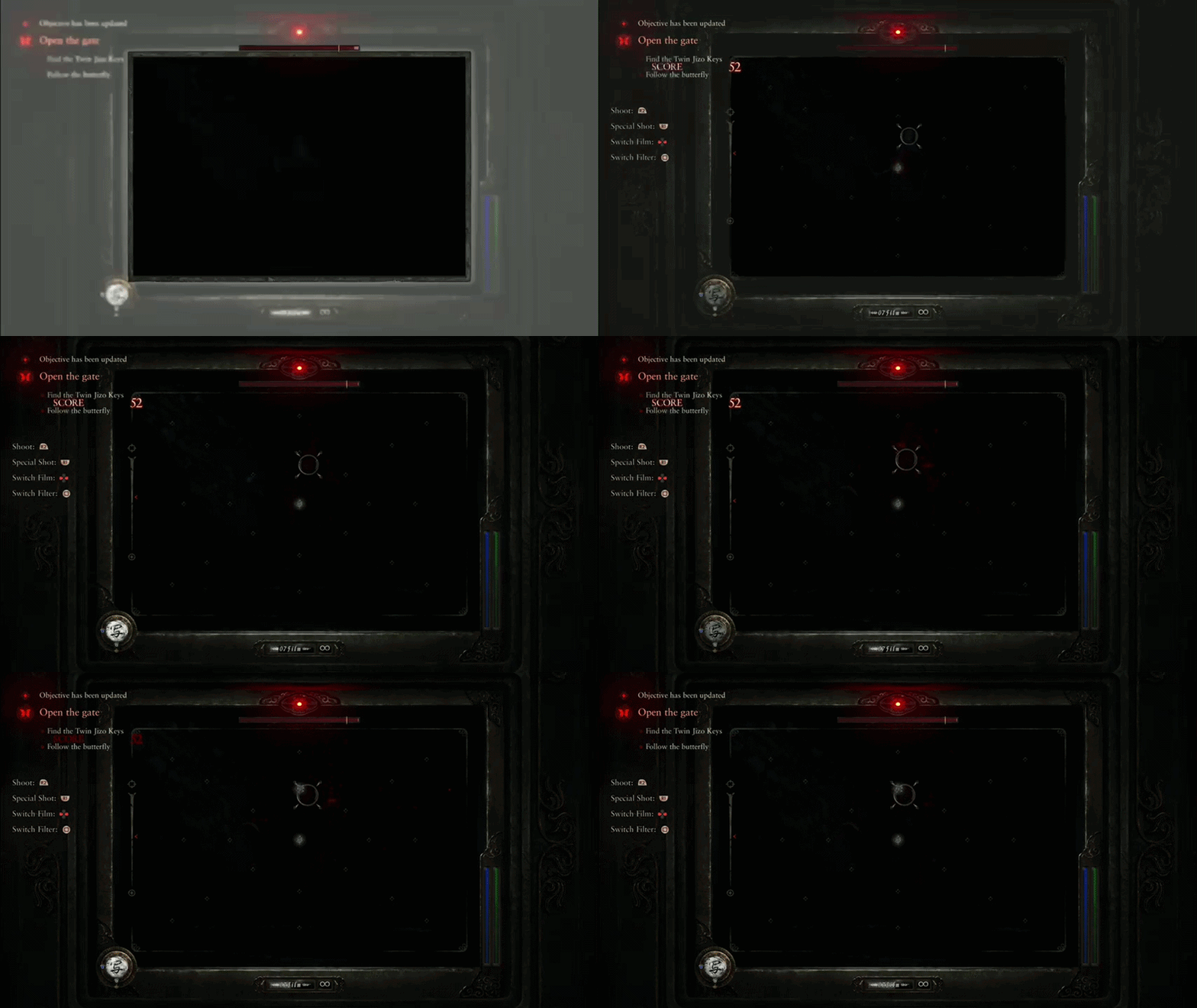
This mechanic was so poorly implemented. It should stress me out, get me worried about a ghost making a comeback but instead I would just groan with pure annoyance when it would happen. Every ghost has a chance of doing this. And not only that, in rare cases it can happen twice! Even factoring in that the Exposure Filter has a passive mechanic that makes aggravated ghosts take the same amount of damage they would if they weren’t aggravated, it’s still a slog! Mainly because you can’t upgrade the strength of your shots for the Exposure Filter until you beat the game, meaning it can just be better to stick to the Standard Filter since you can upgrade the damage of that one. I truly can’t believe this made it out of testing unless the developers for some reason thought that this slog somehow added to the difficulty rather than just annoyed players. It’s really baffling.
Combat being a slog also extends to other areas of the game, namely backtracking and the Side Stories. The Side Stories will often lead you back to old areas you’ve been through or areas added to the remake. While going through old areas, ghosts will spawn basically as much as they want! I seriously had a moment where I came into a room fought the ghost that spawned there then left the room for a bit only to step back into the room and have the same ghost spawn in again! It hadn’t even been a minute since I beat them the first time. This is mainly a problem because when you are in combat with a ghost, you can’t really progress the Side Stories. To progress most Side Stories you need to take a picture of some Specters that appear. Now you don’t technically need to take a picture of them but they do need to appear and that can’t happen if you’re in combat. Meaning you need to defeat the ghost chasing you in order to progress the story! This wouldn’t be a problem if it was easy to lose the ghosts by running away but to do that you often need to leave the building to get them to despawn, which means you need to go back through the building again to get to the Specter you need which of course means rolling the ghost spawning roulette and hoping one doesn’t!
And the craziest thing of all is that it didn’t have to be this way with a simple change. A change the game already has built in!
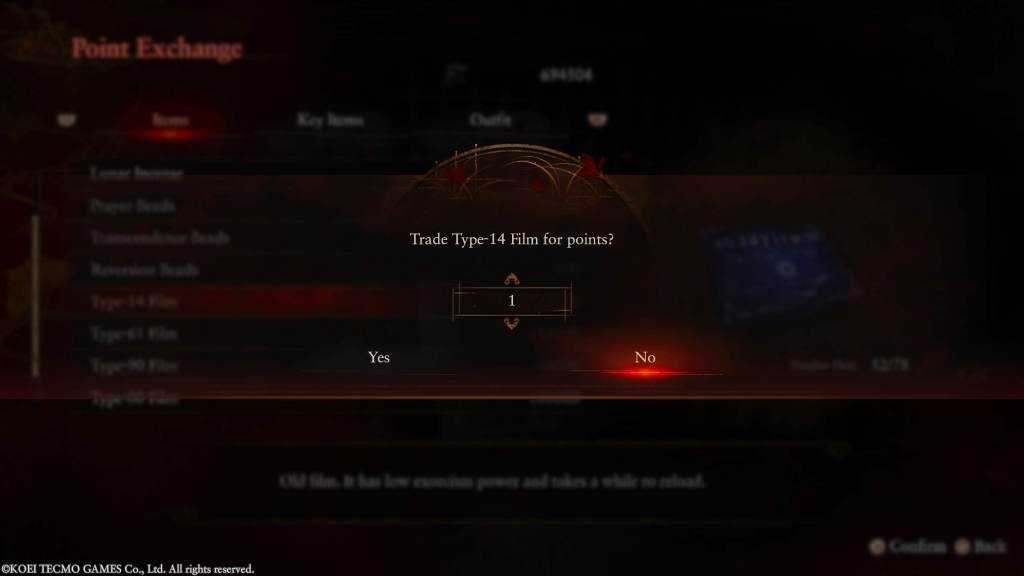
All of the game’s save points have a point store where you can spend the points you earn in combat. However, the only things you can buy are upgrades to your charms, some Herbal Medicine for healing, and some stuff for the photo mode. And that’s it. At least, on your first playthrough. On New Game Plus, and only New Game Plus, the points store opens up vastly, letting you buy upgrade materials, outfits, and most importantly, film! This meant that my second playthrough on Nightmare difficulty felt way more balanced and way more fun than my first playthrough despite Nightmare being the hardest difficulty!
By not even giving the player more film but just the option to buy film, the game and its combat systems work way better. I seriously do not know how the game shipped like this… I’m genuinely hoping there is some kind of patch in the future to address this since, while it does get better especially on NG+, as it is now it leaves a terrible first impression which raises the chances of players being turned off and turned away. Something that’s a pretty big deal if this remake is meant to get more people into the series and excited about a potential new game in the future!
Ugh. I hate that combat is like this. It makes the game hard to recommend which is something I very much want to do! And honestly? I do still recommend it. With some caveats. Normally I wouldn’t recommend a specific difficulty for people to play a game on, but I have to recommend you stick to story difficulty, at least for a first playthrough! Like I said, in NG+ the ability to buy film really helps a lot with the game’s balance and it helps a lot with enjoying the rest of the game, because the remake honestly is a great experience! Beyond the combat.
I want to end this review on more of a high note. As a whole the Fatal Frame 2 Remake is flawed and not just because of the usual Fatal Frame reasons. But it is still a great way to experience this classic survival horror game. I wouldn’t say it’s better or replaces the original in anyway, both have their ups and downs clearly, but the remake does a lot right and enough that I’d recommend it to fans of the original too and not just new comers trying to see what this niche horror series is about.
There’s a lot to love here so I do hope you’ll check it out! The remake is available on just about everything From the Xbox, PS5, Switch 2, and Steam! It’s also $50 instead of the usual $70 you see for most games.
Give it a go and let me know what you think! And here’s hoping the next Fatal Frame review I do will be for a brand new game!
But those are just my thoughts! What are some of yours? Interested in giving the remake a try? Have you ever played a Fatal Frame game before? I’d love to hear your thoughts so don’t be shy!
And thank you for taking the time to read the post! If you enjoyed it feel free to leave a Like or share the blog with a friend. You can also follow the blog on WordPress or on Twitter if you want to stay up to date on new posts. Also if there’s a topic you’d like me to discuss sometime, go ahead and tell me in the comments! Any interaction is appreciated, even just viewing this post, so thanks again for stopping by.
 Games for Thought
Leave a comment