

While I talked briefly about Abiotic Factor before, recommending it in my post talking about the many good games that came out this summer, I have since fully beaten the game and honestly really want to write about it! This is one of the very few survival crafting games that managed to grab and hold my attention all the way to the very end. And the fact that it has an end is an important factor in that. So I wanted to talk a bit more about it! To sing its praises and explain why this survival crafting game in particular grabbed my interest so much.
As mentioned above, Abiotic Factor is a survival crafting game. The easiest and must recognizable example of a game in this genre is Minecraft of course. They are games based around surviving by crafting your own equipment, cooking your own food, and building your own shelter. They are games usually defined by their freedom in what you can do and create with lots taking place in a sandbox, so like a big open world for you to break down and build in. This is where Abiotic Factor starts to differ from other survival crafting games!
Abiotic Factor, which I’ll probably just start calling Abiotic for short, takes place in a set location, specifically a massive underground facility built for science and experiments. This does not change between playthroughs, you will always be in this place! And while that does hamper the replay value a bit, I think Abiotic makes up for it plenty by being such a good experience all on its own. The fact that it’s set in a specific place that was hand craft for progression rather than a creative canvas is one of the things that drew me most to the game to begin with! While I absolutely understand why people enjoy having either a randomly generated environment or just a blank area to do whatever they want with, I need more structure with my games, I’m not creative enough to make my own fun out of something like Minecraft. And thankfully Abiotic Factor is built for some one just like me!
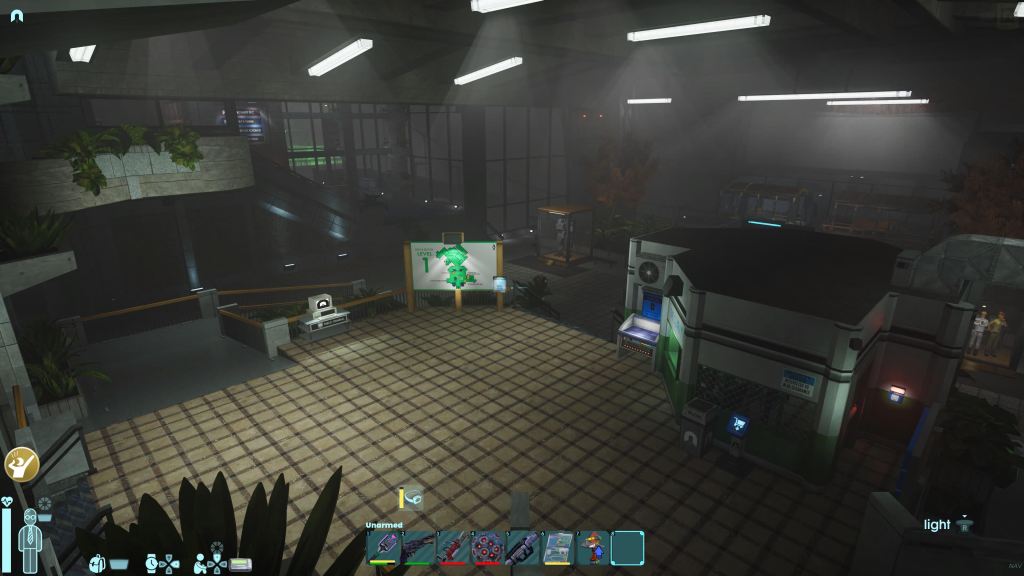
Progression and a purpose, a reason to be playing, those are the things that survival crafting games lack for me. After I play around for a bit, make a shabby base, and survive a few nights, I’m usually done with survival crafting games. If there’s no drive for me to keep going, to keep crafting beyond just upgrading and surviving, I lose interest fast. And this is what Abiotic does differently. The game has progression and gives you a purpose to keep going!
Like I was saying before, the game is set in an underground facility. You are a scientist working in said facility when things go horribly wrong leading to you and every one else being stuck inside. This already sets Abiotic apart from most other survival crafting games I’ve experienced! Rather than being stuck in a forest or something, you’re in an underground science facility with lots of crazy technology. The setting, and art style, is heavily inspired by Half-Life 1 and as a fan of that game, I am all about that! After starting either a single player game or multiplayer one, you’re given a brief tutorial and story introduction and shoved right into character creation! Here you pick what kind of scientist, or security specialist, you want to be and are shown how each role performs. Funny enough, after having finished the game, I realize how little this selection matters.

These starting stats are pretty worthless in the grand scheme of things. You’ll be leveling up far beyond this, with any head start not meaning much. However! I do think it was very smart to include this selection. Especially if you’re playing with friends who also have never played this game before, which is how I experienced the game.
Beyond knowing the game was a survival crafting game, my friends and I went in pretty blind. We did the tutorial and got right into character creating together which is where we saw the roles. Obviously we figured these roles would put us on set paths, not realizing the minor stat increases didn’t do much, but just the thought that it would be significant is the important part! For instance, I picked a medical background wanting to the healer of the group while a friend wanted to focus on crafting and building. Beyond the slight head start for the stats, nothing was stopping my friend from doing medicine or me from crafting and building, but these roles instead gave us something to focus on! There’s a lot to Abiotic, a lot to craft and understand, by having the player pick a role it also has them pick a focus. So while I focused on medicine and healing, my friend focused on crafting and building. In the early game this was super important and made each of us feel very important to surviving! It wasn’t till much later in the game that we realized that these roles did little in actually defining what we can and can’t do. But I’m beginning to believe even the developers knew this and only really have you pick a role to help provide some focus early game so players wouldn’t get overwhelmed. It certainly worked for me!
Speaking of early game, lets talk about how things get started and how the game works in my favorite part, the progression!
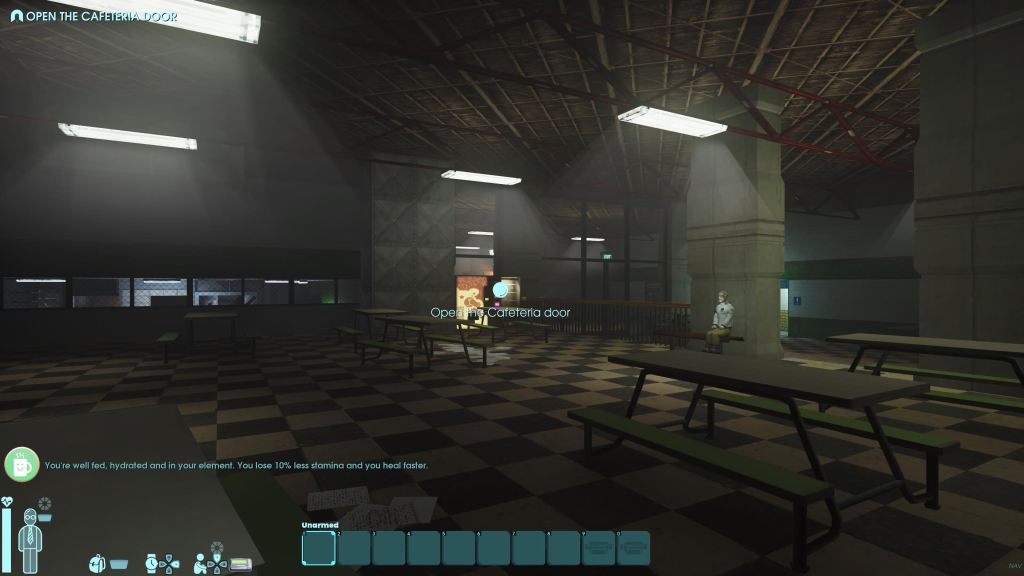
You start off in a simple cafeteria with a simple goal, get out. To do this, you need to make a battery in order to open the door that is blocking your way, as well as keeping a scientist friend out. This is a super clever way to start things off! It teaches the player a lot of useful information about the game in a super intuitive way. To make this battery and progress, you’ll have to explore around the area, climbing through vents, collecting materials and killing little alien monsters. And that’s all before you even get to the door that requires the battery! Once you get there, you’ll need to make a crafting bench in order to actually make said battery. Doing all this teaches the player just about everything they’ll need to know about the basics of Abiotic. Namely that progress will involve exploring and crafting. With said exploring being dangerous when it comes to running into enemies! Not only that, by making a bench, you are technically setting up a base. As I said, there are hostile aliens in the cafeteria despite it being a starting area. By forcing the player to make a bench, they’ll get to see that benches actually stop enemies from spawning around it. Making the area somewhat safe! This helps the player very organically make their first base of operations. Even better, the cafeteria provides the player with a lot of useful things, like a semi working kitchen for making food, some sinks for water, and a fridge for storing food! To help with not overwhelming the player with all this right from the start, the hunger and thirst meters go down very slowly until you open the door with that battery. This lets the player get use to things before really dropping them in the deep end!
So! To sum it up, this starting area provides a very organic way to introduce the player to the mechanics of the game without having to hand hold them too hard. Making this a wonderful tutorial not just for a survival crafting game but games in general! Once that battery is made and the door is open, the game has truly begun.
From this point, you will be given objectives on how to progress. Sometimes they will provide you with enough information to tell you exactly where to go but other times the game will basically just tell you to explore a certain area. That’s how the game play loop goes. You find a new area, explore around it collecting materials and learning new things to make before you hit a wall that requires you to either explore further or create something that allows you to progress. This is a super smart way to do progression as it ties the core concepts of survival crafting into a drive to keep playing beyond just surviving. And that right there is the main reason I fell in love with this game.
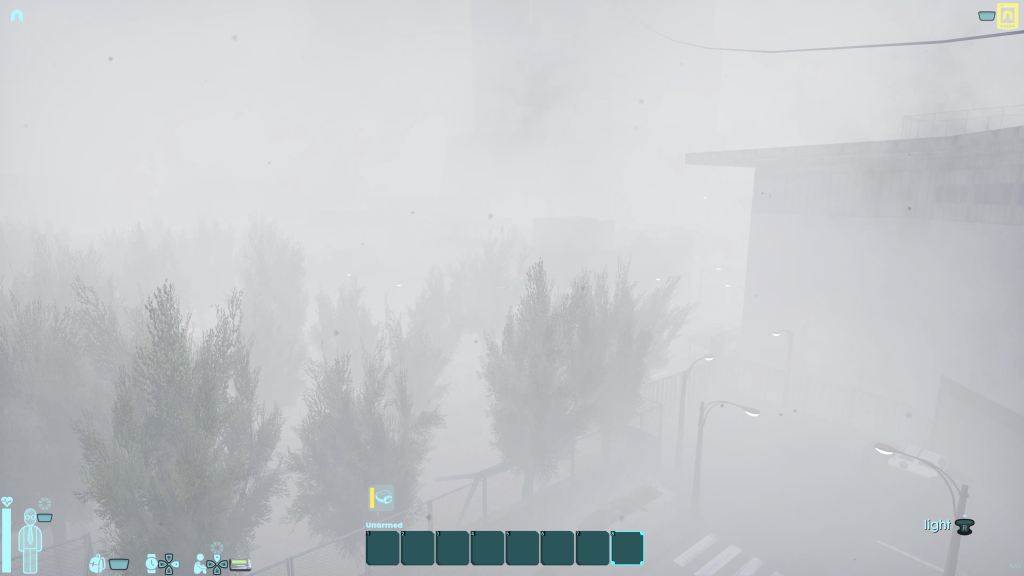
But simply having an objective wasn’t what did it, it was also the fun of exploring itself. I don’t want to undersell the environments that Abiotic puts you in. While it is a lot of labs, offices, and living areas, the game also throws a curve ball when it introduces the portal worlds! These are worlds you can teleport to that are often vastly different from the main areas of the game! From the foggy streets of Flathill to the zombie infested furniture store to the aliens’ own camp! It is always up in the air where you’ll be taken to when you jump in a portal. Granted, it does help me personally that a lot of these places are horror inspired but still!
Even without including the portal worlds, the underground facility itself is massive! While it is technically lots of labs and research places, said places vary wildly given that they are all researching different things. And going from place to place isn’t exactly easy. See, one of the big ways the game makes you interact with crafting and learning to build new things is that new areas often introduce brand new threats. While you start out just fighting aliens, new enemies quickly emerge. From soldiers with guns to automated security bots, you will need to get armor and weapons and keep upgrading them if you don’t want to get destroyed while you look for a way to escape. And the progression of weaponry really is something! You’ll start out with wrenches and what not but by the end you’ll be throwing laser grenades that return to your hand when thrown and firing railguns at your enemies!
This was yet another way that the game really hooked me. It gave me a reason to actually interact with crafting and material gathering. And it ties back to that progression I keep mentioning. Speaking of progression, let’s talk more about exploring! As that helped me discover yet another aspect of the game I came to adore. That being base building!

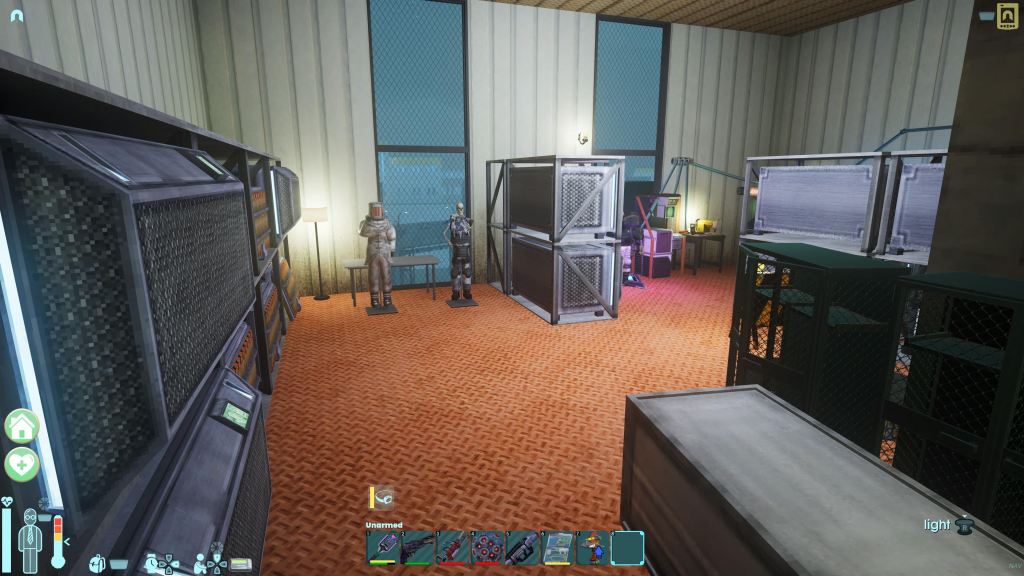
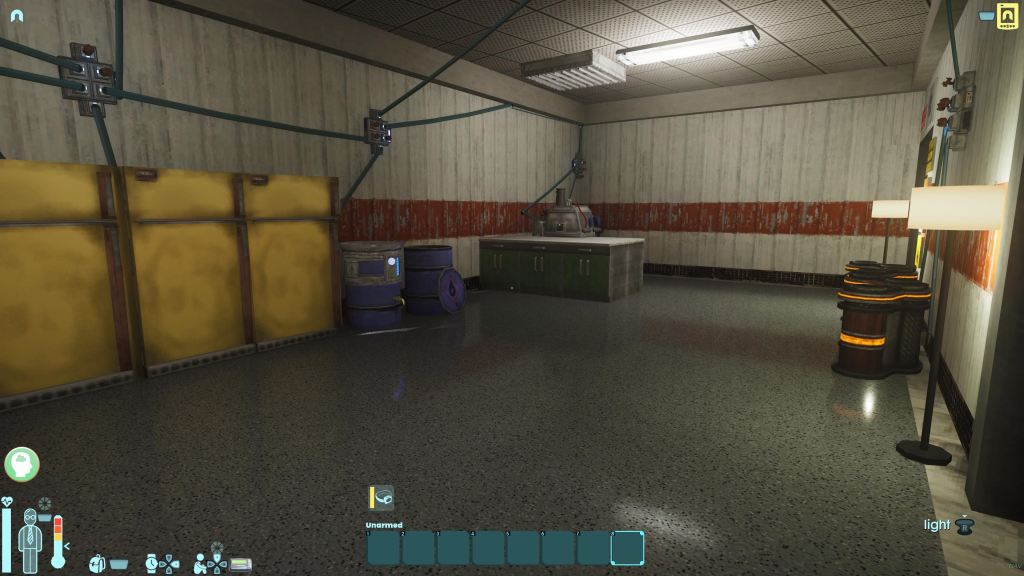
Like I said above, Abiotic is a huge game. I put over a hundred hours into a single playthrough and that’s not even including the fact that the friends I was playing with played some on their own, helping to progress things without me needing to be there. And during those 100+ hours, you’ll be exploring and going deeper into the underground facility. As such, you’ll be needing a place to keep all your things, and that cafeteria from the start of the game isn’t going to cut it. So you’re going to need a base, and more than one most likely!
My friends and I ended up moving bases a couple times in our playthrough. Partly because as we got deeper in, it became a chore to travel between our base and the new areas, despite the fact that the game honestly does a good job of connecting each area. But it was mostly because we kept out growing each place we set up shop in. And this is where I feel that the prebuild, non sandbox set up really shines, because rather than building a base from scratch, it was always fun and a challenge to find a good place to set up in this massive facility! It might sound weird that I basically enjoyed having less freedom when it came to base building, but because of that it forced us to get creative. Not only that, it was always exciting for me personally to walk around an area and slowly begin to realize how it could be used as a base and what we’d need to do to make it livable. With each base, we began to realize that a lot went in to picking a new spot beyond just having a good place for the kitchen, storage and crafting, and our own living spaces. Defending the base became a pretty important thing to consider!
While placing a bench stops enemies from spawning in a certain area, that doesn’t mean it’s safe. Every few nights, you will get an alert that the something feels wrong in the air and that something will be coming to the base that night. What that ‘something’ is will vary the further you get into the game and you won’t know until the night rolls around. With that in mind, we quickly realized it would be a lot easier, and a lot less risky, to set up some defenses! This became another fun, almost puzzle like, aspect to picking a base! We’d need to figure out where enemies would be coming from and how to set up there. In one of our final bases, we figured out enemies always came from a particular walk way, so we went about stepping up a turret and Tesla coils to hold them off! It was extremely effective and always very satisfying to flip the switch that turns on the defense and watch the enemies fall to them.
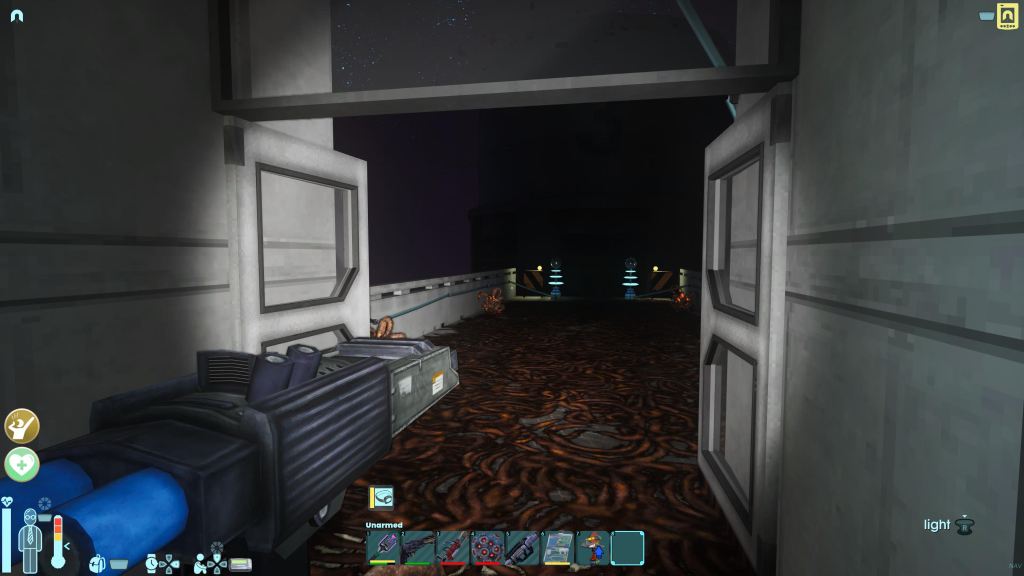
And all of this, the base building, crafting weapons, the urge to venture deeper, wouldn’t have mattered without that thing I keep bringing up. Progression! It’s truly what drove me to keep playing and kept me coming back to the game. In other survival crafting games, I would have probably made one base, got nice and set up, and then stopped after a few days. But not with Abiotic Factor! I saw this game through to the end, and even then I still want more!
To be fair though, not every aspect of the game is perfect. For instance, combat is kind of nothing. It really boils down to who can do the most damage the fastest without too much strategy being involved. It does of course provide you with the perfect reason to use all your fancy new weapons, but that’s about it. And while I won’t consider it a bad part of the game, you probably noticed that I didn’t really bring up the game’s story despite it having one! It’s not exactly deep or anything, but there are some fun reoccurring characters, Abe and Janet being the stars of the show, but beyond that it’s not exactly something to write home about. Again, not that the story is bad, in fact I think the lore you can pick up from emails and records is pretty neat, but it also doesn’t added to the game in any crazy way. Which is why I didn’t feel the need to really bring it up during this review until right at the very end here.
One thing I should mention though, is the fact that Abiotic Factor is actually an indie game! Coming to us from Deep Field Games, they are a small indie team from New Zealand with Abiotic being one of their biggest games yet. Until researching a bit more about the game, I had no idea that it had been in development for so long, and playable on Steam through Early Access. I am so thankful that the game came to consoles, as I played it on my PS5, right when the 1.0 launched! And even more thankful that it was on PlayStation Extra so I got to play without paying. Even though, at this point, I’d say the game is well worth the price!
Keep up the good work, Deep Field! My friends and I are already eagerly awaiting the next big update.
But those are just my thoughts! What are some of yours? Are you a fan of survival crafting games? Thinking about giving Abiotic Factor a try after reading this? I’d love to hear your thoughts so don’t be shy!
And thank you for taking the time to read the post! If you enjoyed it feel free to leave a Like or share the blog with a friend. You can also follow the blog on WordPress or on Twitter if you want to stay up to date on new posts. Also if there’s a topic you’d like me to discuss sometime, go ahead and tell me in the comments! Any interaction is appreciated, even just viewing this post, so thanks again for stopping by.
 Games for Thought
Leave a comment